
in Tackle
Why I Make My Own Fly Fishing Leaders
By flyman58, 23 min read
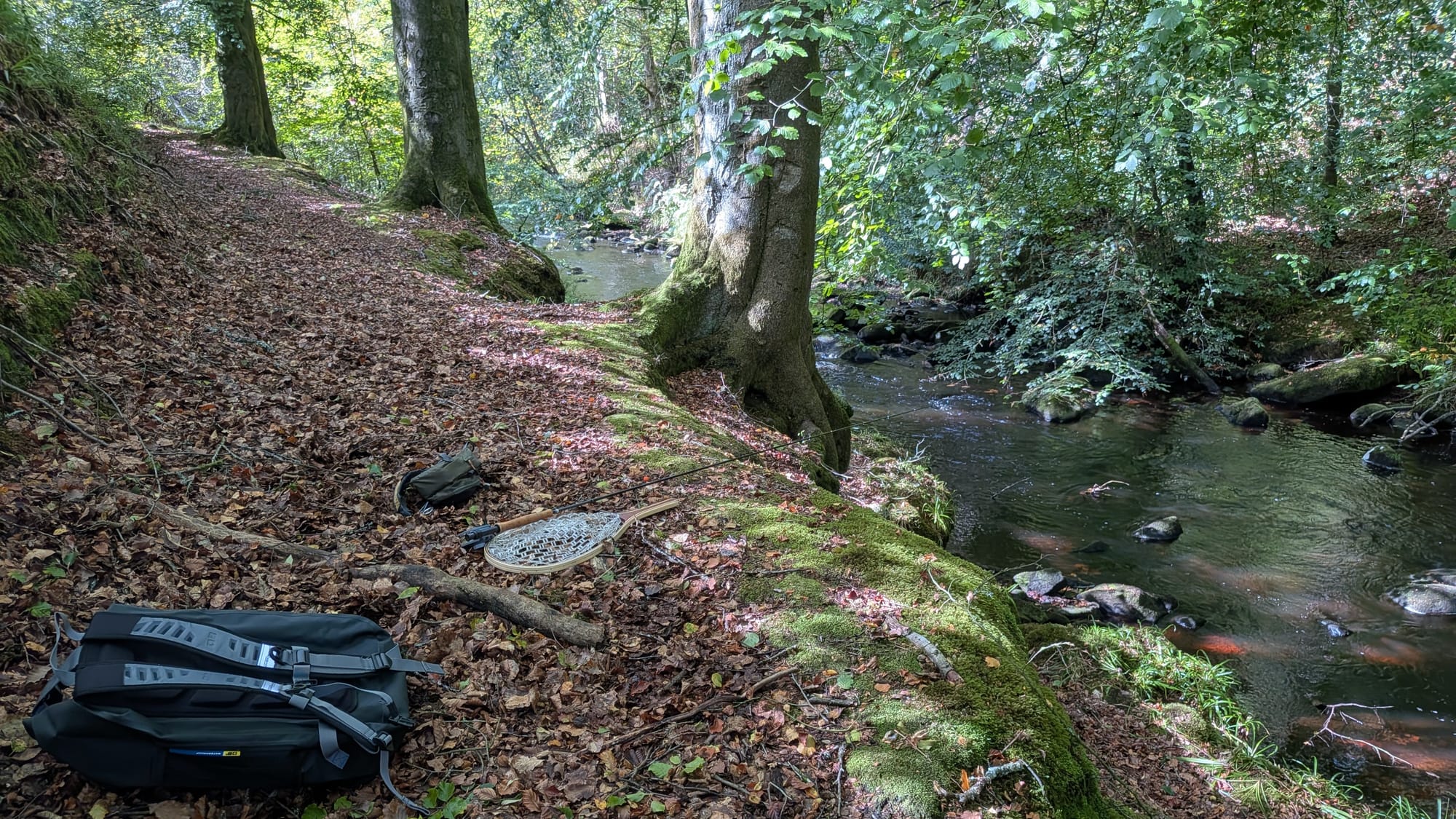
I started tying my own leaders because I couldn't find a shop-bought one that worked for me. Some coiled after a while, and I kept trying different leaders without finding one that hit the spot. Building my own is a start to fix that. It also costs far less, and it has become a part of fly fishing I truly enjoy experimenting with. I think it's worth doing, I think you should try! I built the calculator below to help you start and show you what I use.
Why make your own leader
It's much much cheaper. A Rio Powerflex Trout 9 ft leader is about £6, a pack of Orvis Superstrong is almost £10 without any discounts (about £15 for two). The line in a 12 ft leader that you build comes to roughly 70 to 80p. That's a big saving. There is a level of investment at first, but you can buy enough line for £20-30 that will crate 50-100 leaders. This makes it about 5 to 10 times cheaper than the budget leader and about 20 times cheaper than the premium one.
You control the materials. You pick the lines that suit you, and you know exactly what is in each section: brand, diameter and strength. Stroft GTM 0.16 mm, for example, has a test strength of 3.0 kg, so I know what my point section can take.
You can customise it. Everyone fishes differently. You decide the taper, how long the tippet is, whether it has a sighter or a tippet ring, and how it suits the way you fish.
It's fun. It adds another layer to fly fishing. You can experiment, change one section at a time, and work out what suits your own water.
What I use, and how I got from the standard Harvey to my version
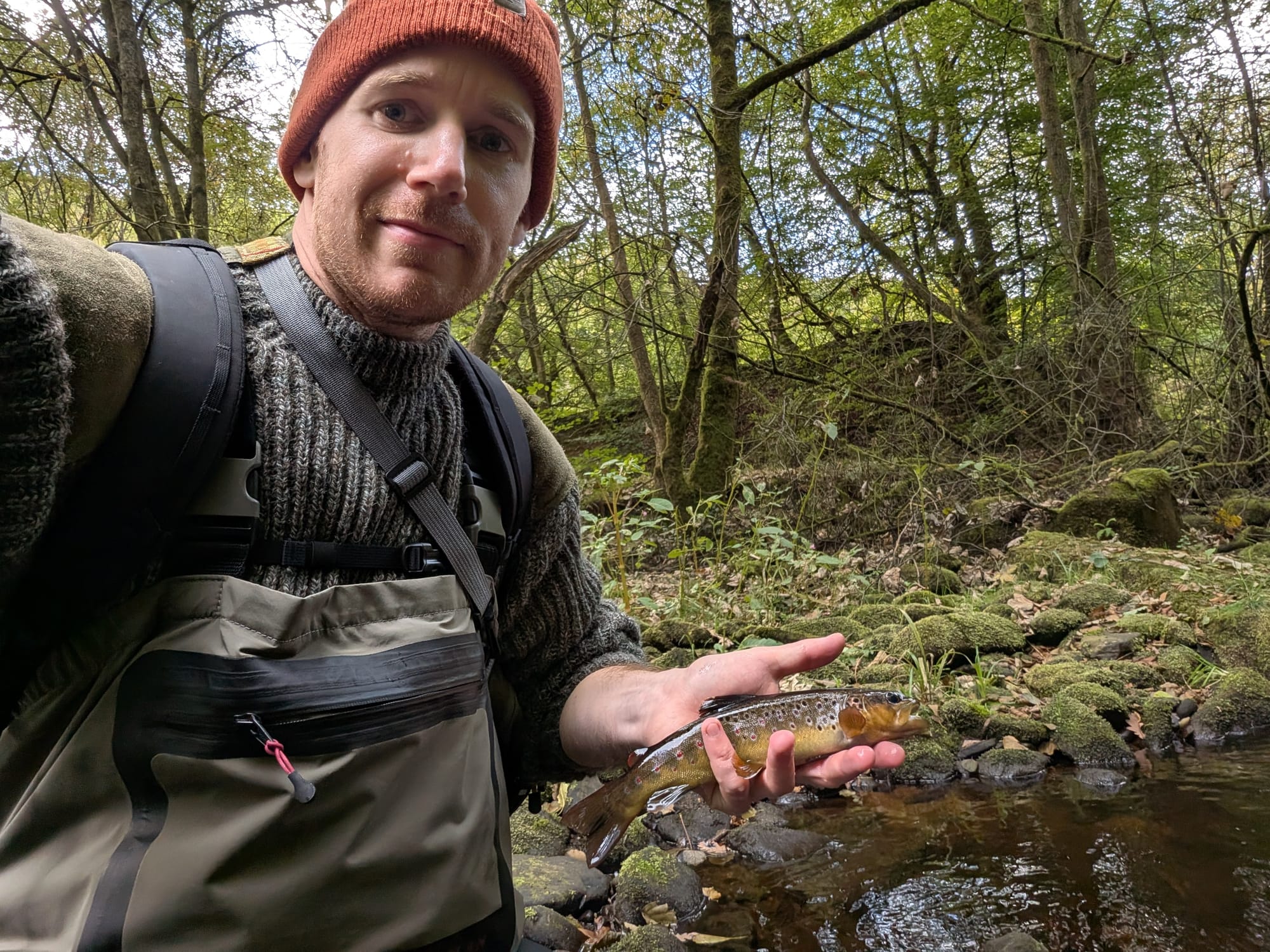
I like to fish in all sorts of situations: a small stillwater and big trout (I have been starting to enjoy this more and more thanks to Pennine fishery), nymphing for grayling on medium rivers in the winter, and my favourite small creeks where I find the most quiet space. In one session I might go from small dries to streamers and nymphs. I wanted a leader setup that allows me to switch easily from different way of fishing and perform well enough for me.
I started with the standard George Harvey leader as Domenick Swentosky of Troutbitten sets it out, then changed it for the way I fish: a core section that helps with my casting, and a tippet ring so I can swap tippets quickly instead of retying the leader and a long tippet to suit my fishing. This is the version I fish now:
Section | Material | Length |
|---|---|---|
Butt | Maxima Chameleon 20 lb | 20 in |
Maxima Chameleon 15 lb | 18 in | |
Maxima Chameleon 12 lb | 18 in | |
Maxima Chameleon 10 lb | 12 in | |
Sighter | Stren Original Gold 8 lb | 8 in |
Taper | Stroft GTM 2X (0.22 mm) | 12 in |
Stroft GTM 3X (0.20 mm) | 26 in | |
Ring | Tippet ring | |
Tippet | Stroft GTM 4.5X (0.16 mm), or 4X (0.18 mm) or 5.5X (0.14 mm) | 36 in |
My leader is still evolving. I don't have a perfect solution, and probably nobody does, but trying is half the fun.
How to use the calculator
The calculator makes it easier to start building your own leaders. Pick a preset, change what you like, and copy the cut list to the bench.
- Pick a setup from the list and follow the sections.
- Set a target length and press Scale to fit.
- Change any length, or swap the material of a section.
- Press Edit to remove sections, add new ones, add a tippet ring, or move sections up and down.
The calculator
Leader calculator
Pick a setup, change any length, and get a cut list with the knot for each junction. Lengths are finished lengths. The cut list adds the line the knots use up. Choose Edit sections to swap materials or build your own.
| Section | Finished | Cut at | Suggested knot | Move or remove |
|---|
Line needed
Knot allowances
A blood knot uses about 1.5 in of line in total. The calculator splits that between the two pieces, so each piece gets half. Tie one test knot with your own line and change the number if yours uses more or less. The tag piece is cut long because its lower end becomes the tag.
Blood knots where the thinner piece is 0.22 mm or thicker, double surgeon's or Clinch knot/ Orvis knot below that, Clinch knot/ Orvis knot on both sides of a tippet ring, and a triple surgeon's with the tag pointing down where a dropper or nymph hangs. Stroft GTM sizes used here: 2X 0.22 mm, 3X 0.20 mm, 4X 0.18 mm, 4.5X 0.16 mm, 5.5X 0.14 mm. Diameters are nominal, so check your own spools.
The Standard River and Easy Change setups are adapted from the George Harvey leader as set out by Troutbitten. The mono rig is Troutbitten's Full Mono Rig System. The stillwater setups are my own mix of advice from several UK stillwater sources. Treat every length as a starting point and adjust it to your own water.
Prices checked on 11 Nov 2026 and may have changed.